Beekeepers face a constant battle against the elements when protecting their Langstroth hive roofs. Traditional wood treatments often compromise bee health or fail under seasonal stress. This guide delivers science-backed methods to extend roof longevity using tung oil—a natural, non-toxic solution—while maintaining structural integrity year-round.
Maximizing Hive Roof Durability
Aligning Ventilation and Weatherproofing During Installation
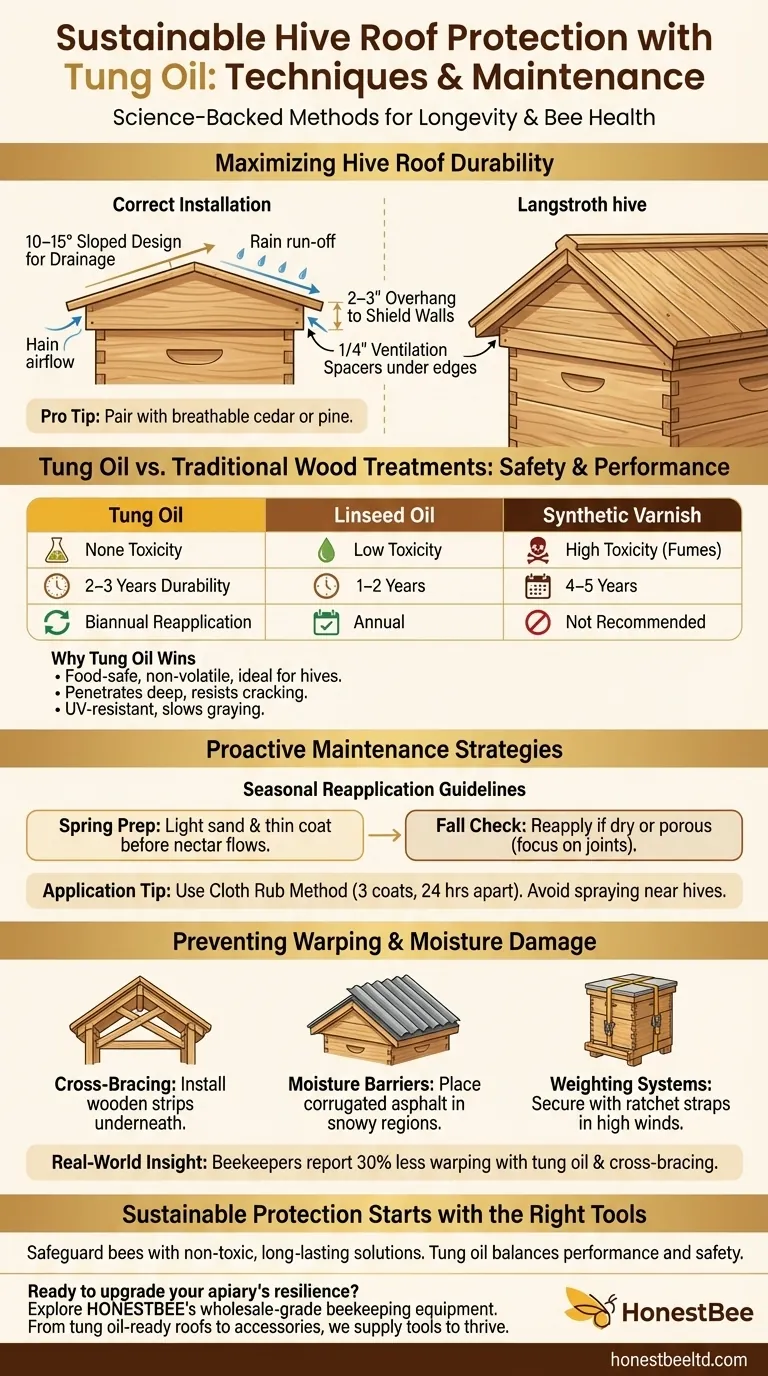
A well-installed hive roof balances two critical needs: venting excess moisture and blocking rain/snow. Poor airflow leads to condensation, while inadequate sealing invites rot. Follow these best practices:
- Sloped Design: A 10–15° pitch prevents water pooling.
- Overhang Extension: Extend roofs 2–3 inches beyond hive bodies to shield walls.
- Ventilation Gaps: Use 1/4-inch spacers under roof edges (avoid front-facing gaps to deter pests).
Pro Tip: Pair tung oil with breathable roofing materials like cedar or pine to enhance moisture regulation.
Tung Oil vs. Traditional Wood Treatments: Safety and Performance
| Treatment | Durability | Toxicity to Bees | Reapplication Frequency |
|---|---|---|---|
| Tung Oil | 2–3 years | None | Biannual touch-ups |
| Linseed Oil | 1–2 years | Low (if boiled) | Annual |
| Synthetic Varnish | 4–5 years | High (fumes) | Not recommended |
Why tung oil wins:
- Food-safe and non-volatile, making it ideal for hive surfaces.
- Penetrates deep into wood fibers, resisting cracks better than surface coatings.
- UV-resistant, slowing gray weathering.
Proactive Maintenance Strategies
Seasonal Reapplication Guidelines for Tung Oil
Tung oil’s durability depends on timely maintenance. Follow this schedule:
- Spring Prep: Lightly sand and apply a thin coat before peak nectar flows.
- Fall Check: Reapply if surfaces appear dry or porous (focus on joints).
Application Tip: Use a cloth rub method (3 coats, 24 hours apart) for even absorption. Avoid spraying near active hives.
Preventing Warping and Moisture Damage
Warped roofs create gaps that expose colonies to drafts. Combat this with:
- Cross-Bracing: Install wooden strips underneath roofs to distribute weight.
- Moisture Barriers: Place corrugated asphalt sheets (non-toxic) atop tung-oiled roofs in snowy regions.
- Weighting Systems: Secure roofs with ratchet straps during high winds.
Real-World Insight: Beekeepers in humid climates report 30% less warping when combining tung oil with cross-bracing.
Sustainable Protection Starts with the Right Tools
Protecting hive roofs isn’t just about durability—it’s about safeguarding your bees with non-toxic, long-lasting solutions. Tung oil offers a proven balance of performance and safety, reducing maintenance labor while keeping colonies secure.
Ready to upgrade your apiary’s resilience? Explore HONESTBEE’s beekeeping equipment—trusted by commercial apiaries for wholesale-grade durability. From tung oil-ready roofs to ventilation accessories, we supply the tools to thrive in every season.
Have questions? Reach out to our beekeeping specialists for tailored advice.
Guide Visuel
Produits associés
- Couvercle de ruche télescopique Couvercle avec tôle galvanisée pour ruche Langstroth et couvercle de ruche
- Lève-ruche ergonomique pliable pour deux personnes
- Couvercle intérieur de ruche pour l'apiculture Couvercle intérieur de ruche
- Enveloppe de ruche isolée professionnelle pour l'apiculture
- Planche de fond solide en bois de pin australien Planche de fond Langstroth pour la vente en gros
Articles associés
- How Outer Telescoping Covers Protect Beehives: Materials and Design Explained
- Comment les toits de ruche télescopiques surpassent les climats froids : une analyse coûts-avantages
- Comment sécuriser les toits de ruche : stratégies d'étanchéité pour tous les types de ruches
- Comment choisir entre les toits télescopiques et les toits migrateurs pour votre ruche Langstroth
- How to Strengthen Langstroth Hive Roofs Against Storms Without Compromising Functionality