For beekeepers, a secure hive roof isn’t just about protection—it’s about preserving colony health through seasonal extremes. This guide reveals practical reinforcement methods that balance durability with essential hive functions like ventilation and moisture control.
Langstroth Hive Roof Fundamentals
Flat Design and Weight Trade-offs
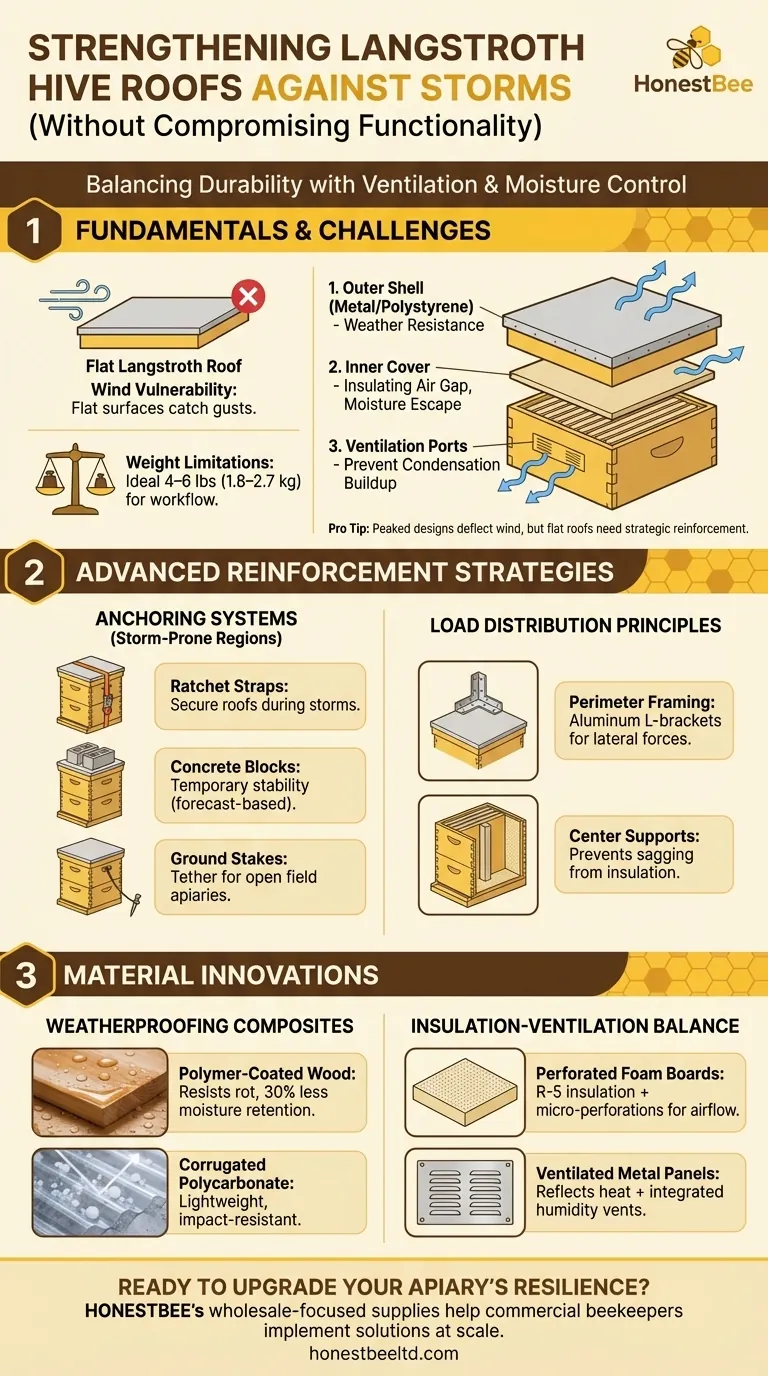
Langstroth roofs prioritize a low-profile, flat structure to simplify hive stacking and inspection. However, this design faces two key challenges:
- Wind vulnerability: Flat surfaces catch gusts more easily than sloped designs.
- Weight limitations: Excessively heavy roofs strain hive bodies during frequent inspections.
Research shows that roofs weighing between 4–6 lbs (approximately 1.8–2.7 kg) offer optimal stability without hindering beekeeper workflow.
Core Components and Ventilation Roles
A functional roof integrates three non-negotiable elements:
- Outer shell: Typically metal or polystyrene, chosen for weather resistance.
- Inner cover: Creates an insulating air gap while allowing moisture escape.
- Ventilation ports: Prevent condensation buildup—a leading cause of winter colony losses.
Pro Tip: The peaked design of some Langstroth roofs (as noted in beekeeping studies) naturally deflects rain and wind, but flat roofs require strategic reinforcement.
Advanced Reinforcement Strategies
Anchoring Systems for Storm-Prone Regions
High-wind areas demand proactive anchoring:
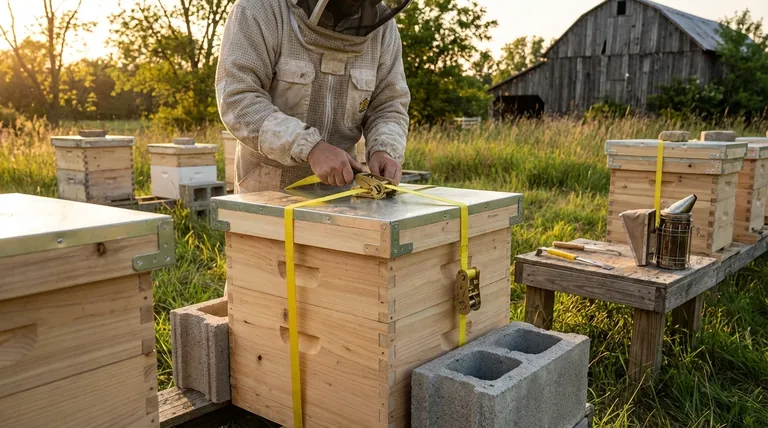
- Ratchet straps: Secure roofs to hive bodies during storm seasons.
- Concrete blocks: Temporary weights (placed during forecasts) add stability without permanent modifications.
- Ground stakes: For apiaries in open fields, steel stakes with lateral tethers minimize uplift risk.
Load Distribution Principles for Added Weight
Reinforcement shouldn’t strain hive joints. Distribute weight by:
- Perimeter framing: Reinforce edges with aluminum L-brackets to absorb lateral forces.
- Center supports: A vertical post under the roof’s midpoint prevents sagging from heavy insulation layers.
Material Innovations
Weatherproofing Composite Materials
Modern alternatives to traditional metal roofs include:
- Polymer-coated wood: Resists rot and reduces condensation (30% less moisture retention vs. untreated wood in humid climates).
- Corrugated polycarbonate: Lightweight yet impact-resistant, ideal for hail-prone zones.
Insulation-Ventilation Balance
Over-insulating risks moisture traps. Achieve equilibrium with:
- Perforated foam boards: Provide R-5 insulation while allowing airflow through micro-perforations.
- Ventilated metal panels: Reflect summer heat but include integrated vents for winter humidity control.
Ready to upgrade your apiary’s resilience? HONESTBEE’s wholesale-focused beekeeping supplies help commercial beekeepers and distributors implement these solutions at scale—ensuring durable, functional hive protection season after season.
Guide Visuel
Produits associés
- Couvercle de ruche télescopique Couvercle avec tôle galvanisée pour ruche Langstroth et couvercle de ruche
- Long Langstroth Style Horizontal Top Bar Hive for Wholesale
- Planche de fond solide en bois de pin australien Planche de fond Langstroth pour la vente en gros
- Planche à fond plein Langstroth pour l'apiculture
- Lève-ruche ergonomique pliable pour deux personnes
Articles associés
- How Outer Telescoping Covers Protect Beehives: Materials and Design Explained
- Comment les toits de ruche télescopiques surpassent les climats froids : une analyse coûts-avantages
- Comment sécuriser les toits de ruche : stratégies d'étanchéité pour tous les types de ruches
- Comment choisir entre les toits télescopiques et les toits migrateurs pour votre ruche Langstroth
- How Beehive Top Cover Design and Materials Protect Your Colony's Health










