Beekeeping success hinges on often-overlooked foundational elements—none more critical than your hive’s bottom board. This unassuming component directly influences colony health through ventilation, pest control, and seasonal adaptability. Whether you’re a commercial apiary or a distributor stocking beekeeping essentials, understanding these dynamics ensures thriving hives and operational efficiency.
The Critical Role of Bottom Boards in Modern Beekeeping
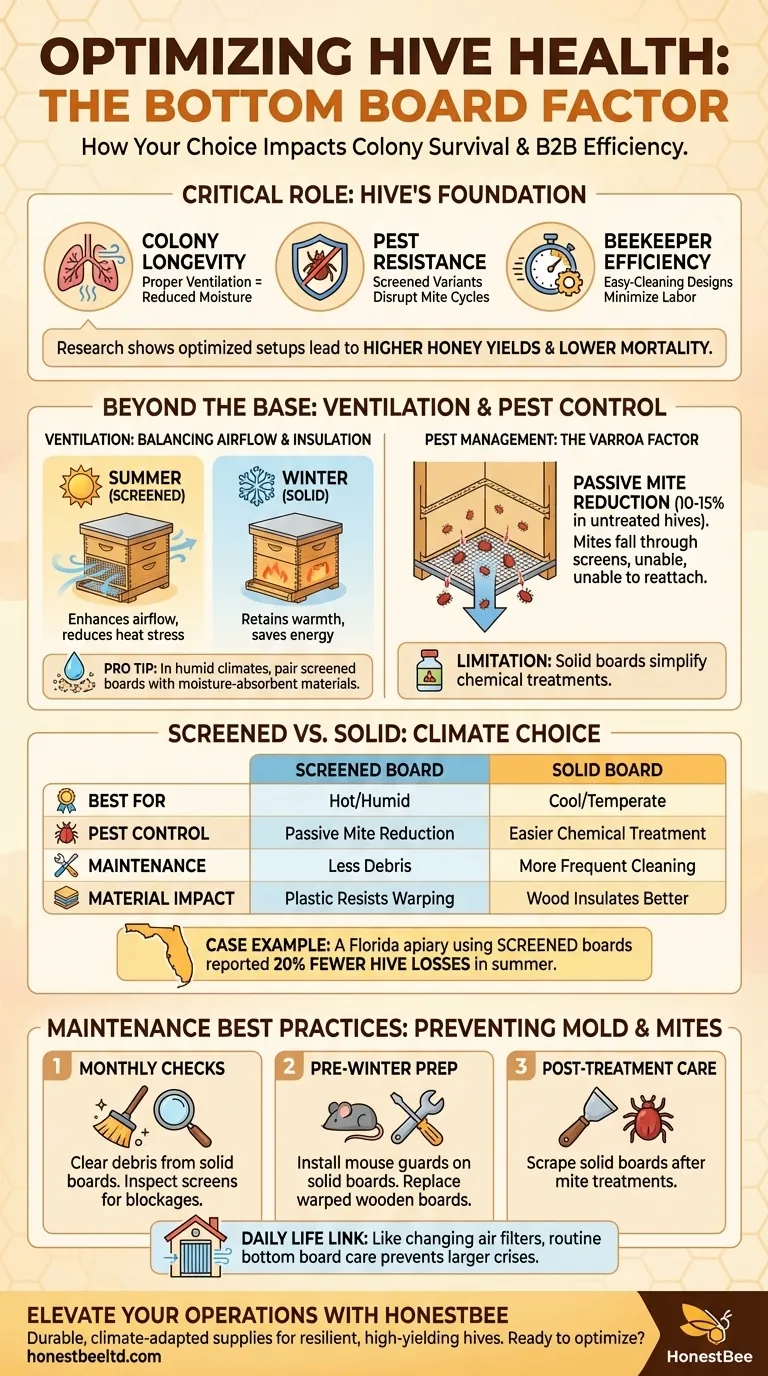
Bottom boards serve as the hive’s first line of defense and environmental regulator. Their design determines:
- Colony longevity: Proper ventilation reduces moisture buildup, a key factor in winter survival.
- Pest resistance: Screened variants disrupt Varroa mite reinfestation cycles.
- Beekeeper efficiency: Easy-cleaning designs minimize labor during inspections.
Research shows colonies in optimized bottom board setups exhibit higher honey yields and lower mortality rates.
Beyond the Base: Ventilation, Pest Control, and Seasonal Adaptations
Ventilation: Balancing Airflow and Insulation
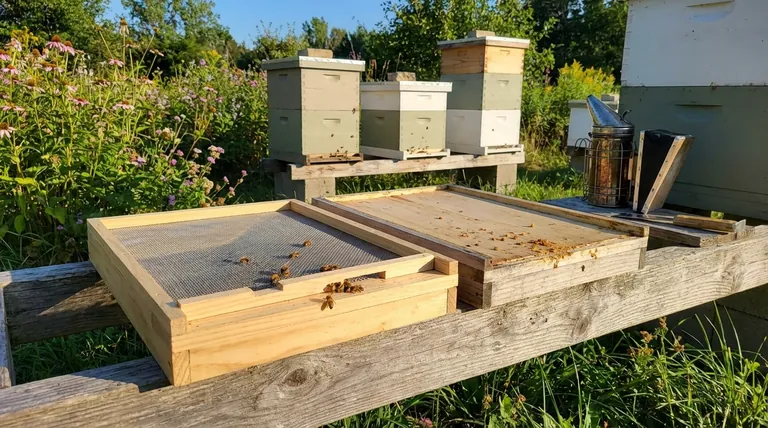
- Summer: Screened bottom boards enhance airflow, reducing heat stress—especially vital for weaker colonies.
-
Winter: Solid boards retain warmth, cutting energy bees expend on thermoregulation.
Pro Tip: In humid climates, pair screened boards with moisture-absorbent materials like wood shavings to prevent condensation.
Pest Management: The Varroa Mite Factor
Screened designs exploit Varroa mites’ natural behavior:
- Mites falling off bees drop through screens, unable to reattach.
- While not a standalone solution, screens reduce mite loads by roughly 10–15% in untreated hives.
Limitation: Solid boards simplify chemical treatments by containing mites within the hive.
Seasonal Swaps? Consider Your Workflow
- Fixed systems: Ideal for large-scale operations prioritizing consistency.
- Modular designs: Allow climate-specific adaptations but require more hands-on management.
Screened vs. Solid: Selecting the Right Bottom Board for Your Climate
| Factor | Screened Board | Solid Board |
|---|---|---|
| Best For | Hot/humid regions | Cold/temperate zones |
| Pest Control | Passive mite reduction | Easier chemical treatment |
| Maintenance | Less debris accumulation | More frequent cleaning |
| Material Impact | Plastic resists warping | Wood insulates better |
Case Example: A Florida apiary using screened boards reported 20% fewer hive losses in summer compared to solid-board counterparts.
Maintenance Best Practices: Preventing Mold and Varroa Infestations
-
Monthly Checks:
- Clear debris (e.g., dead bees, wax flakes) from solid boards to deter mold.
- Inspect screens for blockages that impede mite fall-through.
-
Pre-Winter Prep:
- Install mouse guards on solid boards to block pests.
- Replace warped wooden boards to maintain insulation.
-
Post-Treatment Care:
- After applying mite treatments, scrape solid boards to remove mite carcasses.
Daily Life Link: Like changing air filters in a home, routine bottom board care prevents larger hive crises.
Elevate Your Beekeeping Operations with HONESTBEE
Choosing the right bottom board isn’t just about equipment—it’s about sustaining colonies and streamlining your workflow. HONESTBEE’s durable, climate-adapted beekeeping supplies empower commercial apiaries and distributors to build resilient, high-yielding hives.
Ready to optimize your hive foundations? Explore HONESTBEE’s wholesale solutions today.
Guide Visuel
Produits associés
- Planche de fond solide en bois de pin australien Planche de fond Langstroth pour la vente en gros
- Planche à fond plein Langstroth pour l'apiculture
- Panneau de fond de tamis en bois de pin australien Langstroth pour la vente en gros
- Panneau de fond de tamis Langstroth pour l'apiculture Wholesale
- HONESTBEE Planche d'évasion des abeilles en bois avec mailles triangulaires pour l'apiculture
Articles associés
- Le fondement de votre ruche : la clé cachée de la productivité estivale et de la lutte antiparasitaire
- Ingénierie de la ruche : Le plancher comme système critique de contrôle climatique et antiparasitaire
- Flow Hive vs. Langstroth : quand le prix élevé représente-t-il de vraies économies ?
- How the Langstroth Hive Solves Beekeeping Challenges for Hobbyists and Professionals
- Récolte de miel respectueuse des abeilles : Maximiser le rendement tout en protégeant votre ruche Langstroth