Beekeeping is a rewarding but challenging endeavor, with numerous threats lurking around every corner. From ground-based predators to airborne parasites, your hive’s safety depends on proactive defense strategies. This guide provides actionable, species-specific solutions to help beekeepers safeguard their colonies effectively—without relying solely on harsh chemicals.
Protecting Beehives from Predators and Pests
Bee colonies face threats from multiple directions. Understanding each intruder’s behavior is the first step in building a robust defense.
Terrestrial Threats: Mammals and Ground-Based Intruders
Skunks, raccoons, and bears are among the most destructive predators. These animals target hives for honey, brood, or even the bees themselves.
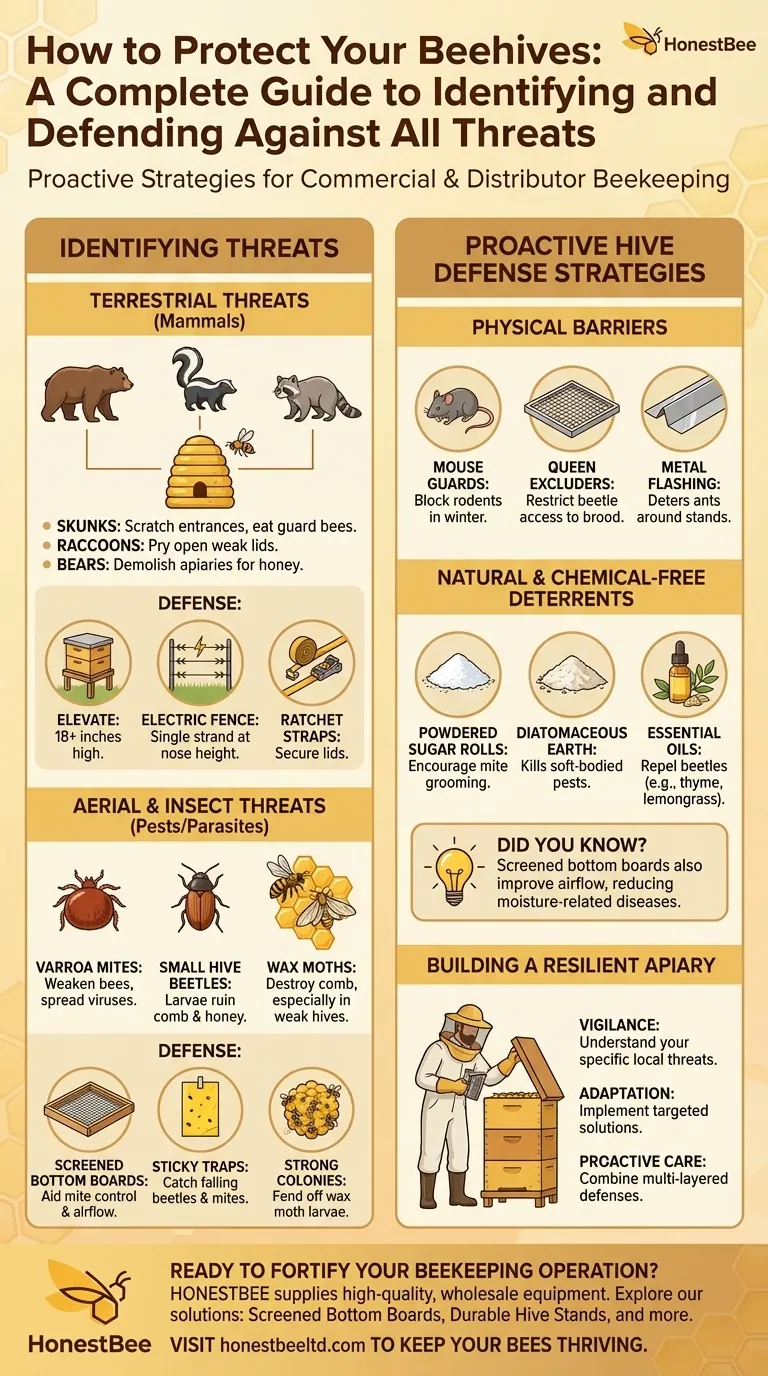
- Skunks scratch at hive entrances at night, picking off guard bees. A telltale sign is scattered bee carcasses near the hive.
- Raccoons are strong enough to pry open weak hive lids, while bears can demolish entire apiaries in one raid.
Defense Strategies:
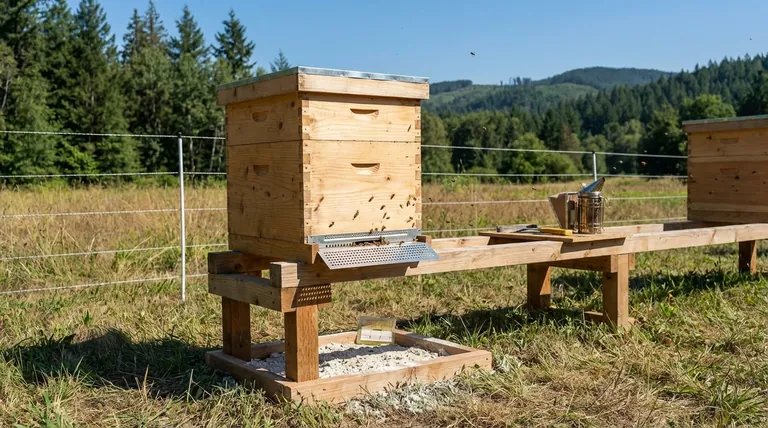
- Elevate hives on sturdy stands (at least 18 inches high) to deter skunks.
- Install electric fencing for bear-prone areas—research shows a single strand at nose height can reduce bear raids significantly.
- Use ratchet straps to secure hive lids against raccoons.
Aerial and Insect Threats: Flying Pests and Parasites
While mammals pose obvious dangers, smaller pests like Varroa mites, wax moths, and hive beetles can silently devastate a colony.
- Varroa mites weaken bees by feeding on their hemolymph and spreading viruses.
- Small hive beetles lay larvae that ruin honeycomb and contaminate stored honey.
- Wax moths destroy comb, particularly in weak or neglected hives.
Defense Strategies:
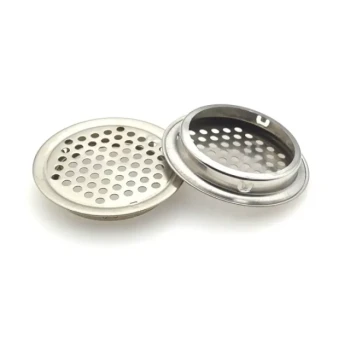
- Screened bottom boards help control mites by allowing them to fall through while improving hive ventilation—key for colony health.
- Sticky traps beneath screened bottoms catch beetles and mites as they drop.
- Strong colonies are the best defense; well-populated hives can fend off wax moth larvae through grooming and propolis use.
Proactive Hive Defense Strategies
Prevention is always better than reaction. Combining physical barriers, natural deterrents, and hive management techniques creates a multi-layered defense.
Physical Barrier Solutions for Different Predator Types
Not all pests require the same approach. Tailor your defenses based on the threat:
- Mouse guards (entrance reducers) block rodents in winter.
- Queen excluders prevent small hive beetles from accessing brood chambers.
- Metal flashing around hive stands deters ants and crawling insects.
Natural and Chemical-Free Deterrent Methods
Many beekeepers prefer low-impact solutions to maintain hive health and honey purity:
- Powdered sugar rolls encourage bees to groom off mites, which then fall through screened bottoms.
- Diatomaceous earth around hive stands kills soft-bodied pests like ants without harming bees.
- Essential oil blends (e.g., thyme or lemongrass) can repel beetles when applied to hive mats.
Did you know? Research indicates that screened bottom boards not only aid mite control but also improve hive airflow, reducing moisture-related diseases like chalkbrood.
Final Thoughts: Building a Resilient Apiary
Every beekeeper’s environment is unique, but the principles of vigilance, adaptation, and proactive care remain universal. By understanding your hive’s specific threats—whether a skunk in Virginia or Varroa mites in Vermont—you can implement targeted, sustainable defenses.
Ready to fortify your beekeeping operation? HONESTBEE supplies high-quality, wholesale beekeeping equipment—from screened bottom boards to durable hive stands—helping commercial apiaries and distributors protect their colonies efficiently. Explore our solutions today and keep your bees thriving.
Guide Visuel
Produits associés
- Pieds de ruche en métal Support de ruche pour la protection contre les fourmis
- Couvercle intérieur de ruche pour l'apiculture Couvercle intérieur de ruche
- Système de sangles Emlock de haute sécurité
- Gants d'apiculture en cuir de chèvre avec manche longue en coton pour apiculteurs
- Veste d'apiculture avec capuche et voile pour apiculteurs
Articles associés
- Comment stabiliser les ruchers dans un sol humide : techniques éprouvées pour les apiculteurs
- La Fondation Invisible : Pourquoi le support de ruche dicte le succès de votre rucher
- How to Choose and Install a Beehive Stand for Pest Control and Colony Health
- Au-delà de la ruche : Comment un simple support évite les défaillances en cascade en apiculture
- L'architecture invisible d'un rucher productif : pourquoi la hauteur de votre support de ruche est un choix de conception du système