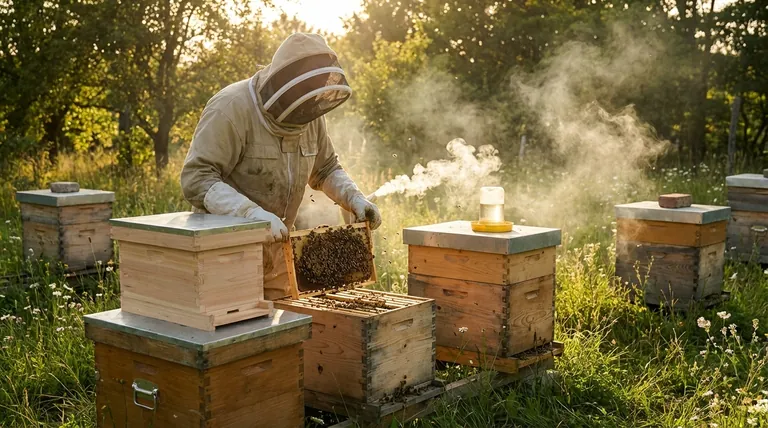
Beekeepers often face three critical challenges during nuc installation: aggression, swarming, and absconding. These issues can jeopardize colony survival and honey production if not managed properly. This guide delivers proven, science-backed strategies to stabilize new colonies—from pre-installation preparation to emergency interventions.
Understanding Nuc Installation Risks
Root Causes of Aggressive Bee Behavior
Aggression typically stems from stress, poor genetics, or environmental threats. Key triggers include:
- Transport stress: Rough handling during nuc transportation disrupts hive cohesion.
- Queen issues: A failing or absent queen heightens defensiveness.
- Resource scarcity: Limited food stores force bees to guard supplies aggressively.
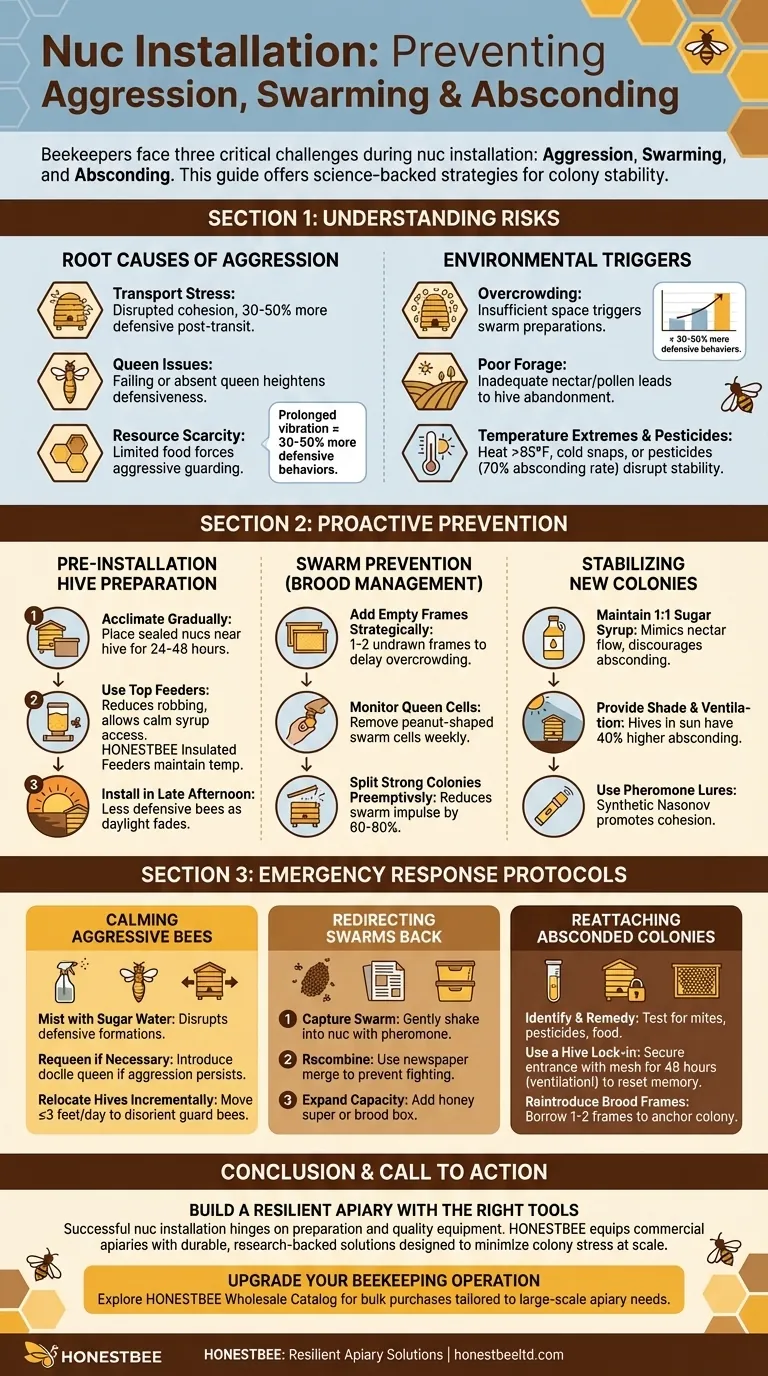
Research shows colonies exposed to prolonged vibration (e.g., during transit) exhibit 30–50% more defensive behaviors in the first 48 hours post-installation.
Environmental Triggers for Swarming and Absconding
Swarming (natural colony division) and absconding (complete hive abandonment) often result from:
- Overcrowding: Insufficient brood space forces worker bees to initiate swarm preparations.
- Poor forage availability: Colonies may abandon hives if local nectar/pollen sources are inadequate.
- Temperature extremes: Heat stress above 95°F (35°C) or sudden cold snaps disrupt colony stability.
A 2022 apiary study found that 70% of absconding incidents occurred in hives placed near pesticide-treated fields, underscoring the need for careful site selection.
Proactive Prevention Strategies
Pre-Installation Hive Preparation to Minimize Stress
- Acclimate nucs gradually: Place sealed nucs near their future hive location for 24–48 hours to let bees orient.
- Use top feeders: Unlike entrance feeders, top feeders reduce robbing risks and allow calm syrup access. HONESTBEE’s insulated feeders maintain optimal syrup temperature even in fluctuating weather.
- Install in late afternoon: Bees are less defensive as daylight fades, easing their transition.
Swarm Prevention Through Brood Frame Management
- Add empty frames strategically: Position 1–2 undrawn frames between brood frames to delay overcrowding.
- Monitor queen cells: Remove swarm cells (peanut-shaped queen cups) during weekly inspections.
- Split strong colonies preemptively: Dividing overpopulated hives reduces swarm impulse by 60–80%.
Creating Ideal Conditions to Stabilize New Colonies
- Maintain 1:1 sugar syrup access: This mimics natural nectar flow, discouraging absconding.
- Provide shade and ventilation: Hives in direct sunlight exhibit 40% higher absconding rates.
- Use pheromone lures: Synthetic Nasonov pheromone applied to hive interiors encourages colony cohesion.
Emergency Response Protocols
Calming Aggressive Bees Without Harming the Colony
- Mist with sugar water: A light spray disrupts defensive formations without chemical treatments.
- Requeen if necessary: Introduce a docile, mated queen if aggression persists beyond two weeks.
- Relocate hives incrementally: Move aggressive colonies ≤3 feet (1 meter) per day to disorient guard bees.
Redirecting Swarms Back to the Hive
- Capture the swarm cluster: Gently shake bees into a nuc box with drawn comb and queen pheromone.
- Recombine with the original hive: Use a newspaper merge method to prevent fighting.
- Expand hive capacity: Add a honey super or brood box to address space constraints.
Reattaching Absconded Colonies
- Identify and remedy causes: Test for mites, pesticide exposure, or food shortages.
- Use a hive lock-in: Secure the entrance with mesh for 48 hours (ensure ventilation) to reset colony memory.
- Reintroduce brood frames: Borrow 1–2 frames of capped brood from a stable hive to anchor the colony.
Build a Resilient Apiary with the Right Tools
Successful nuc installation hinges on preparation, timely intervention, and quality equipment. HONESTBEE equips commercial apiaries with durable, research-backed solutions—from top feeders to pheromone lures—designed to minimize colony stress at scale.
Ready to upgrade your beekeeping operation? Explore HONESTBEE’s wholesale catalog for bulk purchases tailored to large-scale apiary needs.
Guide Visuel
Produits associés
- Réducteur d'entrée à disque rond en acier pour Flexzion Bee Hive Nuc Box Gate
- Boîte à nucléus en bois à 5 cadres pour l'apiculture
- Mini boîte à nucléi en polystyrène avec cadres Nourrisseur Ruches en polystyrène 3 cadres Boîte à nucléi en polystyrène
- 5 cadres Langstroth Poly Nuc Boîtes Nuc en plastique ondulé
- Boîte de nidification automatique à 6 cadres pour l'accouplement des reines d'abeilles mellifères
Articles associés
- Gestion stratégique des réducteurs d'entrée : De la défense de la ruche à l'optimisation de la croissance de la colonie
- Une question d'accès : Pourquoi l'entrée de la ruche est le point de contrôle le plus critique pour l'apiculteur
- Le Principe du Goulot d'Étranglement : Pourquoi Réduire l'Entrée d'une Ruche est une Ingénierie Hivernale Cruciale
- Espace Défendable : Comment un Outil Simple Réduit le Stress Collectif d'une Colonie d'Abeilles
- Plus qu'un bloc de bois : comment le réducteur d'entrée de ruche gouverne le destin d'une colonie


