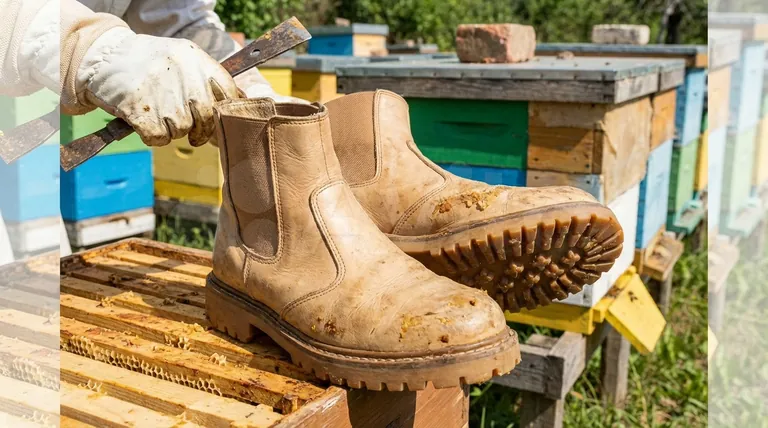
Beekeeping shoes aren’t just footwear—they’re your first line of defense against stings while ensuring stability during long hours in the apiary. The right pair blends sting-resistant materials, ergonomic support, and bee-behavior-aware design. Here’s how to identify footwear that truly protects.
The Critical Role of Beekeeping Footwear
Bee stings on feet aren’t just painful; they can lead to infections or allergic reactions. More critically, sudden movements from unexpected stings risk dropping hive boxes or disturbing colonies. Effective shoes:
- Prevent stings through sealed seams and dense materials
- Enhance stability on slippery, uneven terrain
- Reduce fatigue with arch support for prolonged wear
Research shows most beekeeping injuries occur from slips or gaps in protective gear—not direct hive aggression.
How Bee Biology Influences Shoe Design
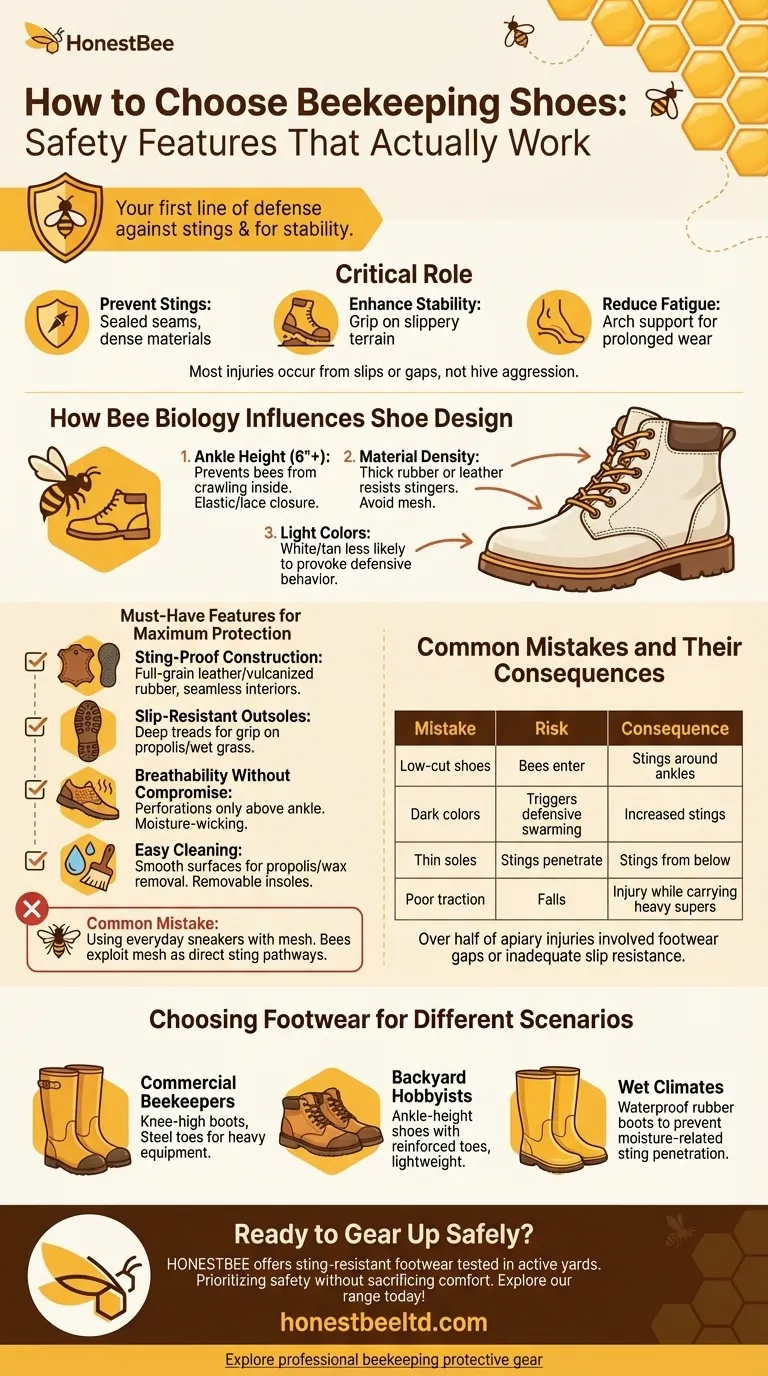
Bees target dark, enclosed spaces (like shoe interiors) when defending hives. This dictates three non-negotiable features:
-
Ankle Height
High-top designs (minimum 6 inches) prevent bees from crawling inside. Elasticized cuffs or lace-up closures eliminate gaps. -
Material Density
Thick rubber or leather resists stingers better than thin fabrics. Avoid mesh panels—bees can sting through them. -
Light Colors
White or tan shoes are less likely to provoke defensive behavior compared to dark colors.
Must-Have Features for Maximum Protection
1. Sting-Proof Construction
- Full-grain leather or vulcanized rubber offers the best penetration resistance.
- Seamless interiors eliminate entry points for stingers.
2. Slip-Resistant Outsoles
Deep treads (like those on hiking boots) maintain grip on propolis-coated hive stands or wet grass.
3. Breathability Without Compromise
Perforations should exist only above the ankle line. Look for moisture-wicking liners to prevent sweat buildup.
4. Easy Cleaning
Smooth surfaces allow quick removal of propolis and wax. Removable insoles are a plus.
Common Mistake: Using everyday sneakers with mesh ventilation holes. Bees will exploit these as direct sting pathways.
Common Mistakes and Their Consequences
| Mistake | Risk |
|---|---|
| Low-cut shoes | Bees enter around ankles |
| Dark colors | Triggers defensive swarming |
| Thin soles | Stings penetrate from below |
| Poor traction | Falls while carrying heavy supers |
A study of apiary injuries found that over half involved footwear gaps or inadequate slip resistance.
Choosing Footwear for Different Beekeeping Scenarios
Commercial Beekeepers
Prioritize:
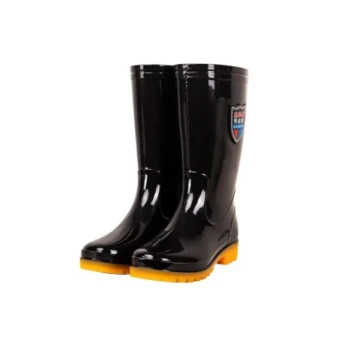
- Knee-high boots for full-leg protection during hive migrations
- Steel toes when handling heavy equipment
Backyard Hobbyists
Opt for:
- Ankle-height shoes with reinforced toes for weekend inspections
- Lightweight designs if mobility is key
Wet Climates
- Waterproof rubber boots prevent moisture-related sting penetration (damp skin is easier to sting).
Ready to Gear Up Safely?
HONESTBEE’s wholesale-focused beekeeping supplies offer apiaries and distributors sting-resistant footwear tested in active yards. From reinforced ankle boots to breathable work shoes, our designs prioritize your safety without sacrificing comfort.
Explore our range today—because the right shoes mean fewer stings and more productive hive checks.
Products You Might Be Looking For:
Explore professional beekeeping protective gear
Guide Visuel
Produits associés
- Chaussures d'apiculture en PVC blanc avec semelle de sécurité antidérapante
- Chaussures d'apiculture professionnelles en PVC avec semelle antidérapante intégrée
- Seau en plastique jaune Perche pour l'apiculture
- Ruches en bois Dadant pour l'apiculture
- Gants d'apiculture en cuir de chèvre avec manche longue en coton pour apiculteurs
Articles associés
- Comment choisir des chaussures d'apiculture qui vous gardent au frais et protégé
- Comment choisir des bottes d'apiculture : critères de sécurité, durabilité et confort expliqués
- Comment choisir des chaussures d'apiculture qui arrêtent les piqûres sans sacrifier le confort
- How to Choose Beekeeping Footwear That Prevents Stings Without Sacrificing Comfort
- How to Choose Beekeeping Footwear: Safety, Comfort, and Cost Considerations