Beekeepers face a critical decision when selecting frame sizes—one that impacts honey yields, colony health, and even their physical comfort during hive inspections. The right frame dimensions can mean the difference between backbreaking labor and ergonomic efficiency, or between mediocre harvests and abundant honey flows. This guide breaks down the science and strategy behind frame selection, helping you align your equipment with your beekeeping goals.
Understanding Beehive Frame Sizes
Standard Dimensions and Terminology
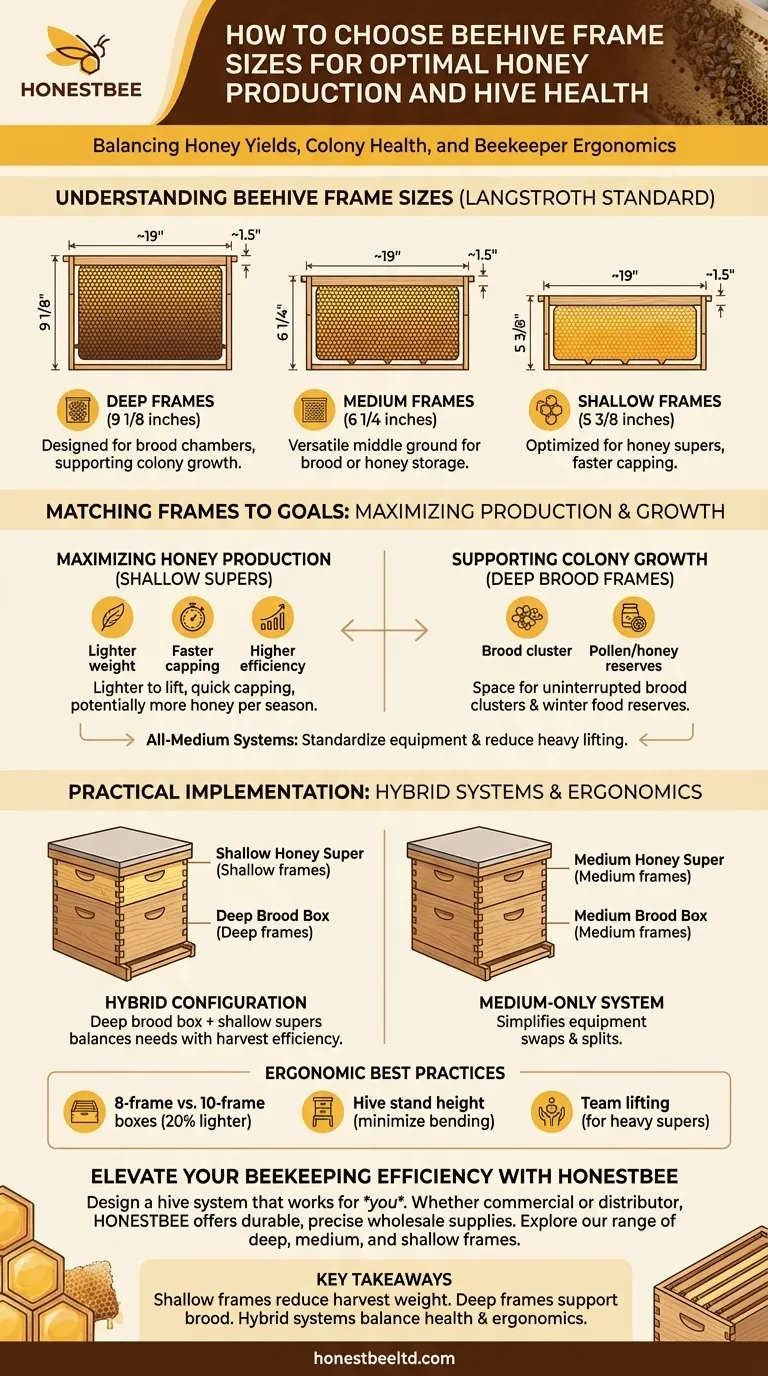
Langstroth hives—the most widely used system—feature three primary frame depths:
- Deep frames (9 1/8 inches): Designed for brood chambers, where bees raise young.
- Medium frames (6 1/4 inches): A versatile middle ground for brood or honey storage.
- Shallow frames (5 3/8 inches): Optimized for honey supers, where bees store surplus honey.
All frames share a standardized top bar length (~19 inches) and spacing (~1.5 inches between frames), ensuring compatibility across hive components.
Box Depth Categories: Brood vs. Honey Supers
- Brood boxes typically use deep or medium frames to accommodate expanding colonies. The extra space supports brood-rearing activities and pollen storage.
- Honey supers often employ shallow or medium frames. Their reduced depth minimizes weight when filled with honey—a full deep super can weigh over 80 lbs, while a shallow might weigh half that.
Matching Frame Sizes to Beekeeping Goals
Maximizing Honey Production with Shallow Supers
Shallow frames excel in honey supers for three reasons:
- Lighter weight: Easier to lift during inspections or harvests, reducing strain.
- Faster capping: Bees complete honey storage quicker in smaller cells, accelerating harvest cycles.
- Higher efficiency: Beekeepers report extracting more honey per season by using multiple shallow supers versus fewer deep ones.
Did you know? Some commercial apiaries rotate shallow supers every 2–3 weeks during peak flows, maximizing yield without overburdening workers.
Supporting Colony Growth with Deep Brood Frames
Deep frames in brood chambers provide:
- Space for brood clusters: Queens prefer uninterrupted comb areas for egg-laying.
- Pollen/honey reserves: Bees store emergency food deeper in the brood nest, aiding winter survival.
However, some beekeepers opt for medium frames throughout their hives (a "all-medium" system) to standardize equipment and reduce heavy lifting.
Practical Implementation Guide
Combining Multiple Frame Sizes in a Single Hive
Hybrid configurations are common:
- Deep brood box + shallow supers: Balances colony needs with harvest efficiency.
- Medium brood box + medium supers: Simplifies equipment swaps and splits.
Pro Tip: When introducing new frame sizes, use a "baited" frame with drawn comb or wax foundation to encourage bee acceptance.
Weight Considerations and Ergonomic Best Practices
- 8-frame vs. 10-frame boxes: An 8-frame deep box weighs ~20% less than a 10-frame version, a key factor for beekeepers with mobility limitations.
- Hive stand height: Elevate hives to minimize bending during inspections.
- Team lifting: For heavy deep supers, coordinate with a partner to prevent injury.
Elevate Your Beekeeping Efficiency with HONESTBEE
Choosing the right frame size isn’t just about equipment—it’s about designing a hive system that works for you. Whether you’re a commercial apiary prioritizing honey yields or a distributor stocking ergonomic solutions, HONESTBEE’s wholesale beekeeping supplies offer the durability and precision your operation demands.
Ready to optimize your hive setup? Explore HONESTBEE’s range of deep, medium, and shallow frames to build a hive that’s productive, sustainable, and physically manageable.
Key Takeaways
- Shallow frames (5 3/8") reduce harvest weight and speed up honey capping.
- Deep frames (9 1/8") support brood development but require careful handling.
- Hybrid systems (e.g., deep brood + shallow supers) balance colony health and beekeeper ergonomics.
Guide Visuel
Produits associés
- Cadre de ruche en acier inoxydable pour l'apiculture
- Cadres de ruche en bois pour l'apiculture et la vente en gros
- Perche en acier inoxydable ultra-robuste pour cadre à clipser
- Cadres à abeilles en bois assemblés avec fondation en plastique pour la durabilité et la commodité par HONESTBEE
- Cadre de repos professionnel en acier galvanisé pour ruches
Articles associés
- La physique de la ruche : comment un simple fil empêche une défaillance catastrophique
- Le Dilemme de l'Apiculteur : Choisir entre les Idéaux du Cadre en Bois et l'Efficacité du Cadre en Plastique
- Comment nettoyer et restaurer les cadres câblés sans compromettre leur durabilité ?
- Comment renforcer les rayons de la ruche avec du fil de fer : Guide de l'apiculteur pour la durabilité
- Pourquoi les cadres de ruche en bois surpassent les alternatives : science, durabilité et expériences d'apiculteurs