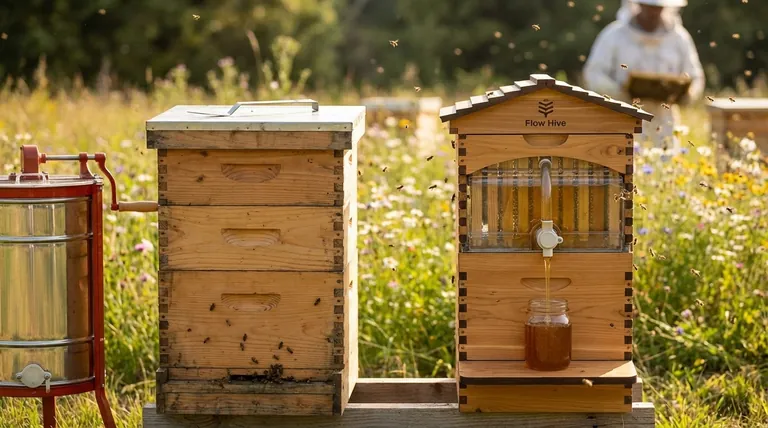
Beekeepers face a critical choice when selecting hive systems: pay more upfront for Flow Hive's convenience or stick with traditional Langstroth setups. This analysis reveals exactly when the investment crosses into profitability across hobbyist and commercial scenarios.
Breaking Down Beekeeping Hive Costs
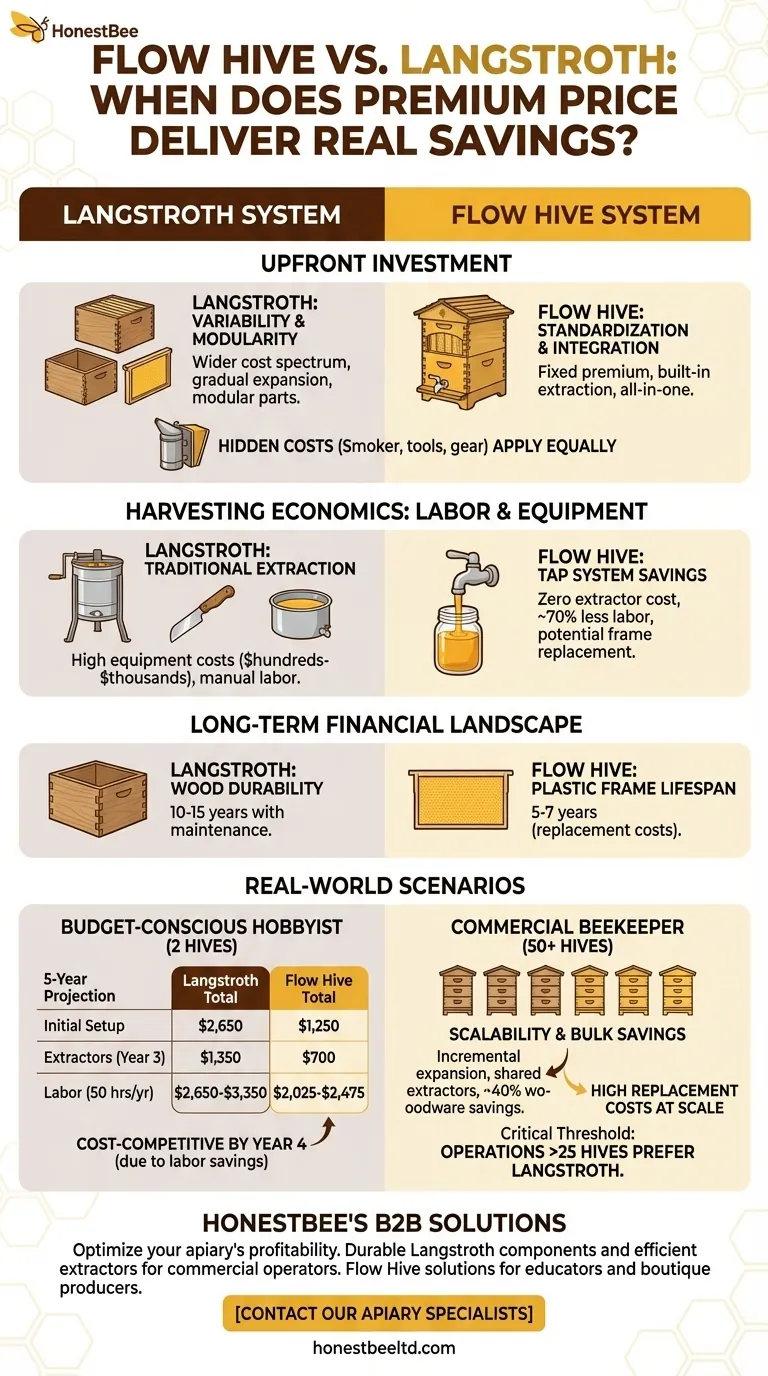
Upfront Investment: Langstroth Variability vs Flow Hive Standardization
Langstroth systems present a wider cost spectrum—basic wooden boxes start affordable but require additional purchases like queen excluders and inner covers. Flow Hive's patented design bundles essential components at a fixed premium, eliminating guesswork but demanding higher initial capital.
Key differences:
- Langstroth modularity: Allows gradual expansion (adding supers as needed)
- Flow Hive integration: Includes built-in honey channels and extraction mechanisms
- Hidden starter costs: Smokers, hive tools, and protective gear apply equally to both systems
Hidden Expenses: Harvesting Equipment and Labor Hours
The true economic divide emerges during honey extraction:
- Traditional extraction requires centrifugal extractors (manual or electric), uncapping knives, and settling tanks—equipment costing hundreds to thousands
- Flow Hive's tap system eliminates extractor purchases but relies on proprietary plastic frames that may need replacement every few seasons
- Labor savings are substantial: Research shows Flow Hive reduces active harvesting time by over 70% compared to manual Langstroth processing
Long-Term Financial Landscape
Maintenance Costs and Hive Longevity
Both systems demand seasonal maintenance (varroa treatments, hive inspections), but material durability differs:
- Wooden Langstroth components: Last 10-15 years with proper storage and repairs
- Flow Frames: Plastic components typically require replacement every 5-7 years based on usage intensity
- Colony health factors: Neither system demonstrates significant advantage in bee productivity when managed correctly
Honey Yield Efficiency per Dollar Spent
When calculating cost-per-ounce of produced honey:
- Small-scale beekeepers (<10 hives): Flow Hive's labor savings offset premium costs after ~3 seasons
- Commercial operations: Langstroth's lower per-unit costs and equipment reuse become dominant factors at scale
- Yield parity: Both systems can achieve similar honey volumes when colonies reach equal strength
Real-World Scenarios
Budget-Conscious Hobbyist: 5-Year Cost Projections
For a backyard beekeeper with 2 hives:
| Cost Factor | Langstroth System | Flow Hive System |
|---|---|---|
| Initial Setup | $300-$500 | $1,200-$1,500 |
| Year 3 Extractors | $400-$600 | $0 |
| Labor (50 hrs/yr) | $750* | $225* |
| 5-Year Total | $2,650-$3,350 | $2,025-$2,475 |
*Valued at $15/hour
Flow Hive becomes cost-competitive by Year 4 despite higher startup costs
Commercial Beekeeper: Scalability and Equipment Reuse
At 50+ hive scale:
- Langstroth's modular design allows incremental expansion
- Extractors become shared assets across multiple hives
- Bulk woodware purchases reduce per-hive costs by ~40%
- Flow Hive's frame replacement costs multiply rapidly at commercial volumes
Critical threshold: Operations exceeding 25 hives typically find Langstroth more economical despite higher labor inputs.
Ready to optimize your apiary's profitability? HONESTBEE's wholesale beekeeping supplies give commercial operators the durable Langstroth components and efficient extractors needed for large-scale success—while offering Flow Hive solutions for educators and boutique honey producers. [Contact our apiary specialists] for volume pricing tailored to your operation size.
Key Takeaways:
- Flow Hive shines for small-scale beekeepers valuing time savings over 3+ years
- Langstroth maintains economic dominance for commercial-scale honey production
- Colony management skill impacts profitability more than hive type selection
Guide Visuel
Produits associés
- Ruches Langstroth haute performance pour l'apiculture professionnelle mondiale
- Langstroth Honey Bee Box Boîtes à ruches pour différentes profondeurs
- Boîtes à ruches Langstroth australiennes pour l'apiculture en gros
- Long Langstroth Style Horizontal Top Bar Hive for Wholesale
- Planche de fond solide en bois de pin australien Planche de fond Langstroth pour la vente en gros
Articles associés
- Comment la conception de la ruche Langstroth optimise la croissance des colonies d'abeilles et la production de miel
- Comment choisir entre les ruches Top Bar et les ruches Langstroth pour une apiculture sans faille ?
- Ruches Langstroth à 8 cadres ou à 10 cadres : Guide pratique de l'apiculteur
- Mastering Seasonal Langstroth Hive Management: Timelines, Techniques, and Troubleshooting
- Pourquoi les ruches Langstroth sont-elles le meilleur choix pour les apiculteurs débutants ?








